Spider Control in McAllen, TX
Spiders, Scorpions, Silverfish and Earwigs in Valley Homes
Spider control in McAllen, TX, arranged through McAllen Pest Defense, is part of the regular quarterly pest visit, and that visit also covers the scorpions, silverfish and earwigs that turn up in Valley homes. Most of the job starts outside, with hiding places and gaps, so this page takes each pest in turn: why it comes in, what to fix first, and when to call.
Why these four share one page
A pest control training course posted by Texas A&M's extension entomology program describes occasional invaders as pests normally found outdoors that come inside for a while: to forage for food or water, to shelter from drought, heat, cold or rain, or by accident. Spiders, scorpions and earwigs fit. Silverfish are the odd one out, since the Field Guide to Common Texas Insects from Texas A&M AgriLife Extension calls them primarily a nuisance pest inside the home. All four are covered by the regular quarterly plan.
Why do spiders collect around the porch and the windows?
Because that is where the food is. Texas A&M AgriLife Extension's spider guide puts it in one line: outdoor lighting attracts insects and the spiders that feed on them. It calls spiders largely beneficial, since they keep flies and plant-feeding insects in check, and notes that wolf spiders commonly come indoors under gaps in doorways. So the fix is fewer insects at the lights and fewer gaps at the doors:
- Point outdoor lights away from doorways, switch them off when nobody needs them, and use yellow bug lights, which attract fewer insects.
- Repair the weather stripping around doors and windows, and caulk around the lighted ones.
- Cut the clutter: tape every seam of stored cardboard boxes, or move things into plastic containers with tight-fitting lids.
- Vacuum the spiders, webs and egg cases together, and hose the webbing off the eaves.
The guide is plain about sprays: spiders are usually difficult to kill with insecticides, and sanitation and physical removal are the best way to manage most of them. Aerosol foggers do little to any spider not already out in the open. Because spiders can be hard to control, the guide adds that hiring a pest management professional may be best.
Scorpions in the Rio Grande Valley: why the heat brings them down
The most common scorpion in Texas, according to Texas A&M AgriLife Extension's scorpion guide, is the striped bark scorpion. It hides by day, hunts at night, and its flat body slips into small cracks and under stones, bark and wood. It also climbs: the guide says it is often found in the attics of homes, and that during hot weather scorpions may move into living areas to escape the attic heat.
McAllen's normal August high is 99.6°F on NOAA's 1991 to 2020 climate normals. When KRGV covered scorpions turning up in Valley homes in August 2018, the report opened on the same point: hot weather means scorpions are looking for ways inside. The Texas AgriLife advice in that report was to seal gaps, keep tree branches from touching the house, and not keep wood indoors or piled close to the home.
Scorpions also glow under ultraviolet light, a point from the field guide that makes a blacklight walk along the foundation after dark a simple way to see how many are around.
Clear and seal before anyone treats
The scorpion guide says scorpions are difficult to control with insecticides alone, so the first step is changing the area around the house. Spiders and earwigs hide in the same kind of places, so one clear-out takes away cover for all three:
- Remove trash, logs, boards, stones and bricks from around the house, and keep the grass there closely mowed.
- Prune bushes and branches back from the walls. Tree branches can give scorpions a path to the roof.
- Bring firewood inside only when it is going straight onto the fire.
- Fit weather stripping to loose doors and windows, and keep window screens tight in their frames.
- Plug the weep holes in brick or stone veneer with steel wool, copper mesh or small squares of screen wire.
- Seal around the roof eaves, the pipes and any other cracks into the house.
For the brush in that pile, McAllen has a schedule: the City of McAllen Public Works site lets you type in your address to find your brush and debris pick-up weeks.
The clear-out pays twice in a Valley yard, because the buckets, pots and sagging tarps lying around also catch rainwater, and standing water is what the monthly McAllen mosquito yard visit goes looking for.
Silverfish: a damp-house problem first
The field guide says silverfish need high humidity, 75% to 90%, to survive, are mostly active at night, and generally keep to the lower levels of a home. They eat flour, dried meat, rolled oats, paper and even glue, and they can contaminate food, damage paper goods and stain clothing. They can also survive long periods without food, sometimes more than a year, so waiting them out is not a plan.
Iowa State University Extension explains a common sighting: silverfish are frequently found in sinks and bathtubs because they fall in while seeking moisture and then cannot climb out. Its control advice includes eliminating the moisture problems where they can develop, such as a drip under the sink or a bathroom that never dries out.
Earwigs at the back door after dark
Earwigs are the brown-to-black insects with pincers at the tail end. The field guide says they spend the day in dark places under rocks, bark and plant debris, are active at night, may be found around lights, and come indoors particularly when conditions outside are unfavorable. NC State Extension adds that earwigs need the moisture found around homes, and that during dry, hot weather they sometimes migrate indoors.
Its fixes are about water and light: gutters and downspouts that carry rain away from the foundation, a clean, dry border right around the foundation wall, and less lighting around doors and windows.
When the quarterly visit should take over
Call once the clear-out is done and they keep coming: a scorpion indoors more than once, webs back soon after vacuuming, or silverfish and earwigs in numbers. There is no separate spider or scorpion price on this site, since the quarterly plan covers all four. The quarterly plan's price list shows an initial service at $150 to $250, quarterly visits at $110 to $150 a visit and a one-time treatment at $150 to $300, and the exact number is written down after the free inspection.
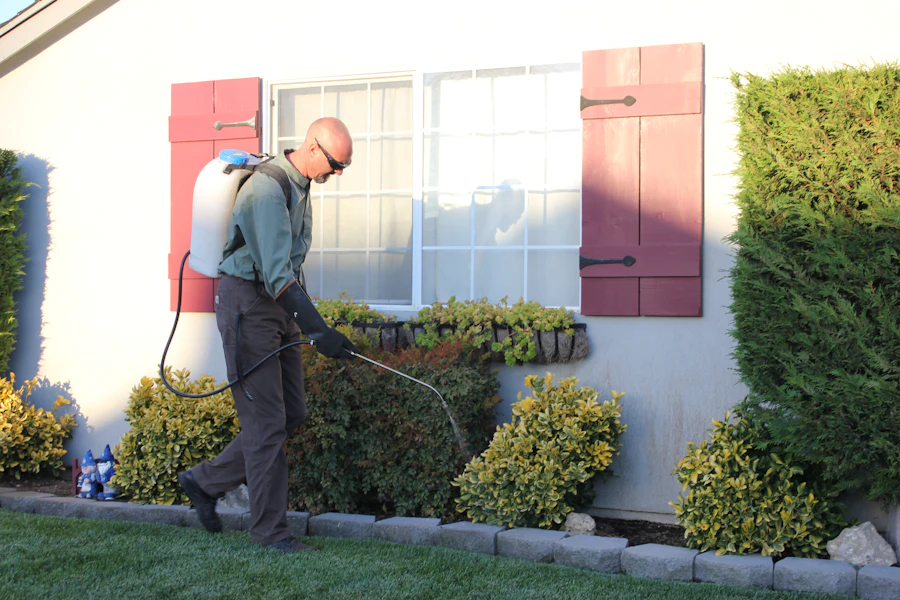
The scorpion guide describes treatment in general terms: product around the foundation and up to 1 foot above the ground on the outside walls, and indoor treatment aimed at entry points, corners, cracks and crevices. The routine visit is exterior-first and does not need anyone home; inside work is on request. McAllen Pest Defense connects your call or form with one licensed pest control business in the Valley, owned independently of this site, and that business inspects, quotes and does every treatment.
This page will not tell you which spider or scorpion is dangerous. If someone has been bitten or stung, ask a doctor.
Spider and scorpion terms from the inspection
Harborage is a hiding place: a board on the ground, a rock pile, a crowded garage shelf. Exclusion means closing the ways in with weather stripping, tight screens, sealant and mesh. A weep hole is one of the small openings left in a brick or stone veneer wall. The foundation band is the treated strip around the base of the house and the first foot of wall. A crack-and-crevice treatment puts product into the gaps where pests hide, not across open floors.
Spider and scorpion questions
How much does spider control cost in McAllen?
Why do scorpions come into the house in summer?
Will a spray get rid of spiders on its own?
Who treats the house?
Clear the hiding spots, then book the visit.
Spiders, scorpions, silverfish and earwigs across McAllen, Mission, Edinburg, Pharr & Alamo, on the quarterly plan.
Call (956) 436-5259